Garage Door Opener Repair Tallahassee, FL
Sensor faults, dead remotes, motors that hum but won't lift - diagnosed and fixed same-day, with an upfront price before we start.
A garage door opener that stops responding is rarely a mystery once someone actually looks at it - but it's one of the most misdiagnosed repairs in the business, because three or four different problems can all look identical from the driveway. In Tallahassee, humidity adds a layer most openers weren't really designed for: moisture works into sensor housings, logic boards, and remote contacts in ways that a dry-climate opener rarely deals with.
This isn't a rare inconvenience here - Tallahassee's summer humidity and storm season combine to put openers under more stress than most manufacturers plan for in their standard warranty testing. Homes in Midtown, Killearn, Betton Hills, and Southwood all deal with the same pattern: an opener that worked fine in spring starts acting erratic by mid-summer as heat and moisture cycle through the electronics.
We diagnose the actual cause before replacing anything, which is the difference between a $120 sensor fix and an unnecessary full opener replacement.
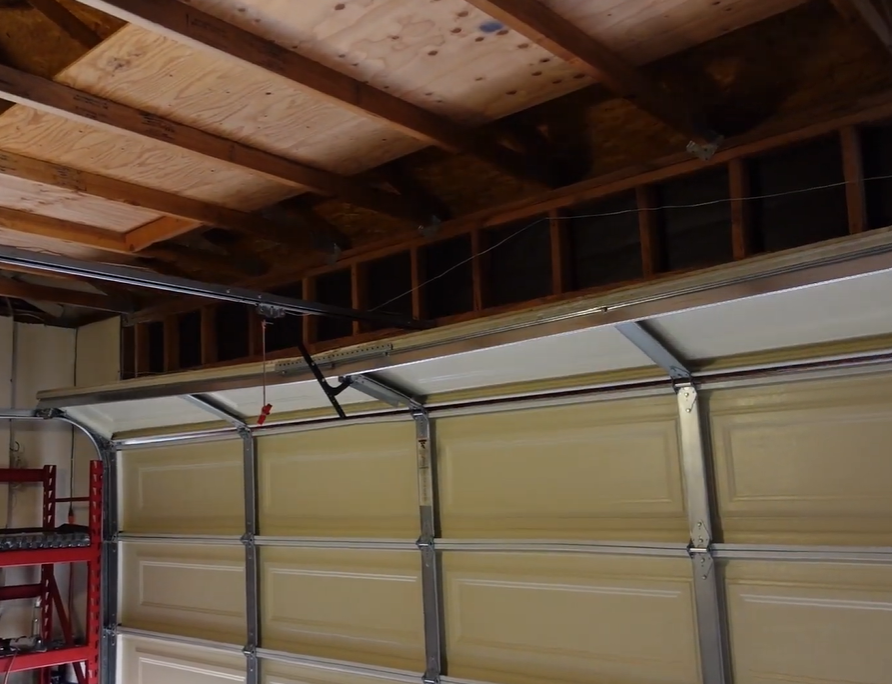
Chain, Belt, Screw, and Jackshaft Openers - What's the Difference?
Most Tallahassee homes have a chain-drive or belt-drive opener. Chain-drive units are the most budget-friendly and durable, but louder - a common choice in detached garages where noise matters less. Belt-drive openers use a rubber belt instead of a metal chain, running quieter, which is why they're popular in homes with a garage under or beside living space. Screw-drive openers use a threaded steel rod and need less lubrication, but perform less consistently in extreme temperature swings than the other types. Jackshaft openers mount on the wall beside the door instead of the ceiling, which is useful for garages with limited ceiling clearance, high storage racks, or a mini-split unit mounted overhead.
On top of the mechanical drive type, most modern openers now include Wi-Fi connectivity for smartphone control - useful, but it also means "my opener isn't working" sometimes means a network or app issue rather than a hardware failure. We check both before assuming the worst.
Which type of garage door opener is best for Florida's climate?
Belt-drive openers tend to hold up well since they have fewer exposed metal parts to corrode, but with proper maintenance, all drive types perform fine in Tallahassee. The bigger factor is how often the opener gets serviced, not which drive type you choose.
What We Usually Find
Opener hums but door won't move
Often a stripped gear, a disconnected trolley, or a failing capacitor on the motor.
Door reverses before closing
Almost always the safety sensors - dirty lenses, misalignment, or something briefly in their path.
Remote or keypad stopped working
Dead batteries, a lost programming code, or interference from a nearby device.
Opener is completely unresponsive
Usually electrical - a tripped breaker, blown fuse on the logic board, or storm-related surge damage.
Travel limits or force settings off
A door that stops too early, too late, or reverses unexpectedly often just needs the travel limits or force settings recalibrated.
Dead backup battery
Many modern openers include a battery backup for power outages - a common Tallahassee storm-season need that often gets overlooked until it's needed.
Why does my garage door opener work sometimes but not others?
Intermittent failures usually point to a loose wiring connection, a weak signal from a remote with a dying battery, or safety sensors that are almost - but not quite - aligned. Humidity can also cause logic board contacts to corrode just enough to create an inconsistent connection.
The Parts That Actually Fail
An opener is more than just a motor. The logic board controls everything electronically - travel limits, force settings, and safety sensor logic all run through it, and it's the single most humidity-sensitive component in the system. The trolley assembly connects the motor's drive mechanism to the door itself via a carriage that rides along a rail; when it disconnects (often from the manual release cord being pulled, intentionally or by accident), the motor runs but the door doesn't move. Gears inside the motor housing - typically nylon or a nylon-metal hybrid - wear down over years of use and are a common cause of a motor that hums without lifting.
The motor's start capacitor gives it the initial power surge needed to begin lifting - when it fails, the motor may hum, strain, or refuse to start at all. Wall controls, remotes, and keypads all communicate wirelessly or via wired connection to the logic board, and any of the three can fail independently of the others. Safety sensors, mounted a few inches off the ground on either side of the door, use an infrared beam to detect obstructions - a legally required safety feature since the 1990s, and one of the most common points of failure we see.
How Long Do Garage Door Openers Last?
Most residential openers are built for 10-15 years of service. In Tallahassee's climate, humidity and heat cycling can shorten that somewhat, especially for units without regular maintenance. If your opener is original to a home built in the 1990s or 2000s, it's likely operating well past its intended lifespan - we'll tell you honestly whether a repair still makes sense or if replacement is the smarter long-term move.
Should I repair or replace an opener that's over 15 years old?
If it's a simple fix - a sensor or remote - repair almost always makes sense regardless of age. If the motor itself has failed on a unit this old, replacement often costs about the same as a major repair while giving you a full warranty and modern safety features.
Honest Ranges for Opener Repair
Is it cheaper to repair or replace my opener?
If it's a sensor, remote, or minor electrical issue, repair is almost always cheaper. If the motor itself has failed on an opener over 10-15 years old, replacement often makes more sense long-term.
Openers We Commonly Service
LiftMaster and Chamberlain - built by the same parent company - cover most of the chain, belt, and Wi-Fi-enabled openers we see in Tallahassee. Genie runs a comparable lineup as their main competitor. Craftsman units are typically rebadged versions of shared platforms, which explains why replacement parts often cross over between brands more than people expect. For commercial and gated-community setups, Linear and Marantec systems show up regularly, usually tied into keypad or card-access entry.
If It's Not the Opener
Sometimes what looks like an opener problem is actually a spring or track issue causing the opener to strain. If your door needs broader attention beyond the opener, our general garage door repair page covers the full range of services, and our emergency repair service is available for openers that fail without warning. For businesses, see commercial garage door repair.
Opener Repair Questions
Yes - LiftMaster, Chamberlain, Genie, Craftsman, Linear, Marantec, and every other major brand, regardless of where it was purchased or installed.
Yes - Tallahassee's summer storms are a common cause of logic board damage. A surge protector on the opener's outlet is a cheap way to reduce this risk going forward.
Most sensor, remote, and minor electrical repairs take 30-60 minutes on-site. A full motor or logic board replacement typically runs 60-90 minutes.
Yes - we cover all of Tallahassee including Midtown, Killearn Estates, Betton Hills, Southwood, and the surrounding area. Same-day appointments available throughout.
We test the sensors, motor, logic board, remote signal, and wiring connections, then give you a written price for the exact repair needed - no guessing, no upsell.
This usually means the remote itself has a dead battery or lost its programming, rather than a problem with the opener - reprogramming or replacing the remote typically resolves it.
Yes - constant humidity can corrode logic board contacts and cause electrical issues in sensors and wiring over time, which is why openers here often need service sooner than the national average.
Not mechanically, but it's worth periodically checking your home Wi-Fi connection and the opener's app pairing, since "not working" sometimes means a network issue rather than a hardware failure.
A jackshaft opener mounts on the wall beside the door instead of the ceiling - useful if you have limited ceiling clearance, overhead storage, or a mini-split unit in the way.
It's not required, but given how often summer storms cause power outages here, a battery backup is a reasonable add-on so you're not stuck without opener access during an outage.
This often points to a relay or capacitor issue on the logic board, or in some cases a stripped drive gear - both are diagnosable during a standard service call.
Gradual increased noise usually means worn gears, a chain needing tension adjustment, or the unit nearing the end of its service life - worth having checked before it fails completely.